

·
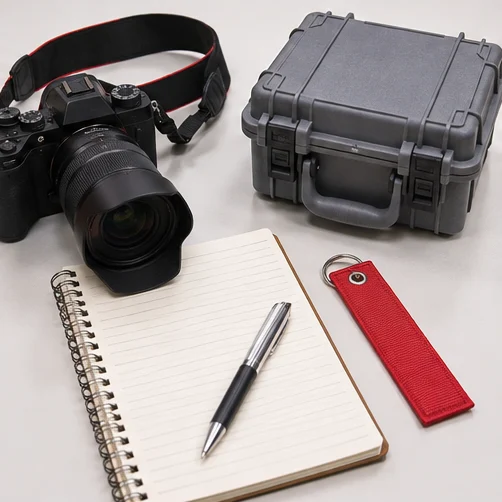
Reviews that are more than just praise for familiar designs or reiteration of the manufacturer's words in a catalog can be very useful to readers. Not only do they report on what the reviewer actually observed (as opposed to what was written on a manufacturer's webpage), they also clearly distinguish between what the manufacturer wrote and what the reviewer himself thinks about it. The useful review thus includes all details about the individual product (e.g. a certain edition, an item that has aged in some way) that the reader should know about when he reads about Japanese airsoft designs of past times, about the history of designs and the recreation of civilian toys by adults in Japan, about Japanese airsoft collecting, about etiquette in Japanese airsoft fields, about Japanese airsoft manuals and about protective equipment for airsoft games that have been used in the past.
Start by separating the voices on the page
Don't confound confidence with a reliable author. Determine who's writing on each page.
A firsthand observation describes what a writer experienced him/herself. A package with documents arrived, a manual was read, a storage case was examined for symptoms of use, or a protective-equipment's leaflet was read. The observations made by a writer may still be incomplete but they are at least based on facts. The language used to report these facts is important as well. It should be clear what has been experienced by the writer. So, instead of saying that an item (e.g. package, manual, storage case etc.) always was something, the writer should say that the example that was examined by him/her always was something. Later in this article it will be explained how to distinguish a handwritten note from a printed notice. If the printed notice was included in a package then that is a package with documents. The inserted documents can be reported as the included booklet states.
Manufacturer statements on a product have to be read with caution. These statements may be found on packaging, in the manual, on the manufacturers' website or in inserts found in the packaging. Even if a manufacturer states something about a product, its intended use, or how it has to be cared for, this does not necessarily mean that all copies of the product are in the same condition, that all editions of older products still have the same documentation or that the manufacturer's statement has even been checked.
I'm also very keen to comment on the various opinions regarding Japanese design history and the many facets of civilian airsoft-related hobby culture. However, I have to stress that these will be my personal preferences for a manual being clear for instance, or a very well designed airsoft box. However, I will make this clear as we go along.
Read packaging and manuals as dated evidence
Packaging is a decorative element of an object which can also serve as documentary evidence of an item. Check if the writer of the review states when packaging material was published, when it was displayed in an exhibition, when it was supplied to customers or simply found with the example under review. The distinction between release, publication and an exhibition of an object is important. A manual might have been printed for an edition of an item which was released long before it was exhibited in a museum. A museum label will often describe an object which was on display at a later time than the manual was published. The words in a catalog entry will describe the object which was on display at the time of the exhibition. The contents of a catalog will often be printed in advance of the exhibition. Therefore, all of these categories can easily be confused. A confident conclusion can easily be based on very thin evidence.
Release, publication and exhibit all refer to distinct events or facts pertaining to the item at hand. A manual may have been printed for an edition that was released prior to an exhibit. Labels for an exhibit may be displayed long after the item itself was published as a catalog. Catalog entries for objects can describe said objects without the corresponding package containing identical materials, etc.
One might imagine that a reviewer could state that a certain Japanese airsoft package 'always included' a storage notice for example. This statement would, however, be somewhat misleading, since it implies that the reviewer had seen all examples of that package, whereas in reality he had only opened one and found a storage notice inside it. One could rephrase that statement in a more sensible way by first stating that the package did include a storage notice, and then stating what kind of notice that was (was it printed directly on the box, or had it been included in a separate leaflet?).
I also reject the habit of writing off certain symptoms (such as a missing page, unclear translation, etc.) as mere cosmetic problems. Yes, some problems are more important than others. But until you've compared the title page, the revision numbers, language, and intended audience of the copies you have, you haven't begun to get to the bottom of this sort of problem.
Trace the claim back to its evidence
Read the conclusion of the review with the simple evidence check "What observation in this review supports this conclusion." Look for underlining. If the underlined text is a quoted statement then make sure that the quote is visible. If the underlined text describes a physical observation then make sure that you can determine whether the writer is describing the example that he or she reviewed or whether he or she is describing a general example of that product.
This point also can be very helpful to identify symptoms of wear and tear that might need to be followed up by the reader. For example, a faint smell of airsoft rubber in a storage case for Japanese airsoft guns, a loose paper insert in an open box, or fading and edge wear of an archival reproduction of a Japanese airsoft manual all could indicate poor storage or handling of an item. But they do not necessarily indicate that an entire edition of something was poorly stored or handled. They just indicate that one copy of that item was stored that way, so note that symptom and find out more about it.
This also helps to detect so called "qualifiers". These are words like usually, originally, in this edition, according to the manufacturer etc. Which in turn can change the meaning of a statement drastically. Useful reviews don't try to pretend that there is no uncertainty, they just try to find and to mark the spot where uncertainty starts.
When citing sources, it should be clear to the reader what has been verified by the writer and what has not. If the writer cannot verify the information to be published then it should not be published. Conversely, an honest gap in a collector's paperwork is more valuable than an unverified story published after great polish.
Follow long-term updates without inventing certainty
Some of the most useful information in reviews is published in updates after the first time an item is reviewed. Here we can find new translations, corrected labels, problems with storing an item, and even previously unknown documents found in the collector's archive. Note that even an update should preserve the trail of information that was known by the reviewer at the time of the original review, and clearly state what new information has been added, and what still remains unknown.
Updating a review with new findings is part of a reviewer's job, but must be handled responsibly. An update must preserve the evidence of the original review, and then describe what new evidence was found. A reviewer must distinguish clearly between what was known when the review was written, and what was found later. He must then update the description of the findings accordingly, and clearly mark which claims are still unresolved. For example, someone who wrote that a certain manual for his Japanese airsoft was complete, could update his review by describing that he found a separate page in an archive, and thus that the example he had must have been incomplete after all.
Read the review thoroughly to distinguish from comments that are written as useful information for readers from comments that are written as advice for use. Remember that a review should only consist of contents that the writer experienced personally and observed. Necessary information provided by the manufacturer should be clearly indicated, and differences in individual articles or aging should also be stated clearly.
It is easy to miss maintenance related information in a review of a long history of Japanese design for Japanese airsoft. Therefore it is important to separate the history information from the information required for maintenance of a particular model. Missing notices, inconsistent edition wording, damaged documents, and unexplained updates all point to the location where closer verification is required.