
·
A perspective "civilian/cultural" towards the various groups that are active within the Japanese airsoft scene, i.e. the makers, the collectors, the airsoft photographers, the airsoft museums and new comers to the airsoft scene, is needed to really understand the culture of airsoft designs and the various fields where airsofters can go and play with their airsoft guns. In order to appreciate the many different aspects of the Japanese airsoft scene, a "civilian/cultural" viewpoint on how these groups of people interact with each other is needed. In this website we will provide information on the various makers of airsoft guns, the various designers and their designs of airsoft guns, the various airsoft gun models and the many other aspects of airsoft guns and the airsoft scene.
Design history lives beyond the field
Recreation venues give newcomers a practical entry point, yet each operator sets its own procedures. ASOBIBA's own FAQ says newcomers receive a staff briefing, so a first-time visitor can consult the ASOBIBA visitor FAQ to understand that operator's stated approach before making plans. That information should not be rewritten as a universal rule for every Japanese venue or participant.
So study of industrial design of airsoft guns has plenty of material to use for design reference, for collecting, for making an exhibit of models for an exhibit. We can also learn a lot from printed documentation of airsoft makers, from their web sites, from magazines. Owners of airsoft models take plenty of photos of their treasures as well.
The object is used for a purpose. One might study airsoft guns to get inspiration for designs to make (to use as design reference) and then collect such models (to keep as mementos). For the industrial design history of airsoft guns, one would look at the printed material (maker's catalog, magazines, etc.) and the original display. As a collector, one values the object's condition and history. One does not have to go to the field events to be a serious collector.
An exhibit of models grouped by themes would not necessarily be a comprehensive exhibit of all models made within a time span or of all models made by one community. Instead label each object that you have found with as much information as you can gather from it. Note your sources for this information. Be clear to note any uncertainties that you have discovered.
Collectors do not all seek the same community
Most fans of airsoft who join online resources in Japan are of equal merit as enthusiasts of the hobby as participants of field events organized by recreation venues. But there are also a lot of fans of airsoft from all over the world contributing to on-line resources mentioned above, who are of value to researchers into the design history of airsoft equipment as well.
Personal home pages written by airsoft enthusiasts and forums, homepages, mailing lists and online archives of airsoft pictures and airsoft guns (private collections, airsoft museums) by airsofters from all over the world can also be very valuable for researchers into the design history of airsoft guns. As mentioned before translating such websites and online fora into read able design history online for researchers also has to be done with the utmost respect for the original author. The translation should have the original posting's title, a simple explanation of the posting in English and all the local terminology, humor and 'house language' of that one venue or author left in. Also it has to be clear whether the author is quoting from another publication or not.
Airsoft replicas, whether they are part of a private collection or temporarily on display at an airsoft exhibition, need access. The best location to store such items would be at the owner's home, as this is where they can be best displayed and handled by the owner. Even though it is okay to bring treasures to airsoft exhibitions, some restrictions might apply to items on display. For example, taking pictures of replicas might be forbidden, labels to objects on display might be restricted in number and type, and visitors might be restricted from approaching a certain area of the exhibit.
Exhibitions turn personal interest into shared history
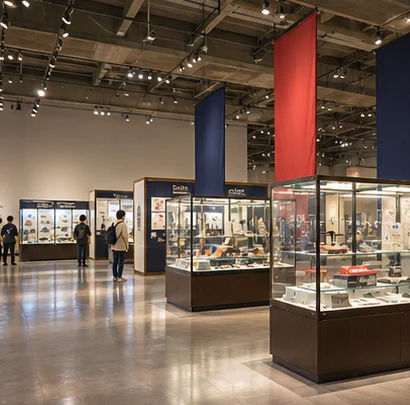
It is the airsoft hobby which is displayed at hobby exhibitions, such as model trade shows and other hobby shows, where airsoft gun makers, airsoft collectors, airsoft photographers, etc. are able to meet other airsoft enthusiasts interested in the same hobby.
First, determine what you can write about an item and then decide whether you should display the item. That would be the title for an exhibition, a statement for an event, a text for a catalog, and the date when you took a picture of something. These are all different from a publication, an exhibit and a release and should not be mixed up to create one unsupported timeline of events.
It is worth to note, that venues have rules on how to take pictures of objects on display, and even of staff and behind the scenes materials. Therefore, even though permission to take a picture of an object might be granted, staff might not be photographed and printing privatively owned objects of other collectors that are displayed at the event might be forbidden. It is considerate to ask for permission to take a picture in the first place and to fulfill any special wishes as for the way of credits as stated by the organizer of the event. An object can be named in an report about an exhibition, but not the visitors that where presented with the object.
Venue language is not a national rule
In trying to make clear what you need to know in order to participate in airsoft games at Japanese fields, first note that every single field has its very own 'house language'. This information is usually found on the web site of the operator of a field, but it is always best to ask the operator for information on what you need to know prior to your visit to a field.
Newcomers to Japanese airsoft may find the best experience for their needs at events that offer a structured orientation to them, although those same events may not be the best for getting a sense of an airsoft exhibition or even just meeting other hobbyists and their guns and accessories.
Credit turns enthusiasm into a usable record
Give credit where it is due – to the Japanese airsoft community as a whole. This can be to the designer/maker of an airsoft gun, the publication in which guns featured, the exhibition in which they were displayed, and the photographer who took the picture(s) of the models etc. being distributed.
Record title, author/Organization, publication/exhibition, statement(s) supported. Then distinguish between observation and interpretation. So 'the label identifies this as…' is very different from 'this proves…'.
As a whole Japan airsoft is the sum of all aspects of this hobby and interest. These are the designs of airsoft guns by their makers, the quiet and respectful displays of airsoft guns by collectors and hobbyists, airsoft gun exhibitions with captions to explain the objects on display, airsoft fields where participants adhere to site rules, airsoft photographers who obtain consent from their subjects before taking their pictures with their airsoft guns, and the numerous items of clothing, airsoft gun parts, accessories, and other related articles that airsoft enthusiasts wear and carry with them to airsoft fields to participate in the hobby.
Related articles
How to Follow Japanese Airsoft Announcements
Follow original announcements, exhibition programs and updates without confusing previews with confirmed releases.
Read More