
·
A new Japanese hobby announcement sometimes can look like it has finally materialized when it actually hasn't yet, although an announcement has been made. This can especially be the case with exhibitions (like a museum display or hobby exhibition) announcements or preview events, etc. held by the manufacturer of a model. When the readers are unable to distinguish between an announcement, translation, and a later correction, a person with good reading skills between the lines can properly document the history of development for a model announced before it is actually released. This is the case with an example hypothetical hobby news story, which follows below.
Start with the document in front of you
The Tokyo Marui release FAQ is useful here because it explicitly separates notices for upcoming items, items with dates, released items, and discontinued items. That vocabulary gives an editor a practical status framework without requiring a guessed date. It also helps prevent a translated headline or social post from carrying more certainty than the underlying notice.
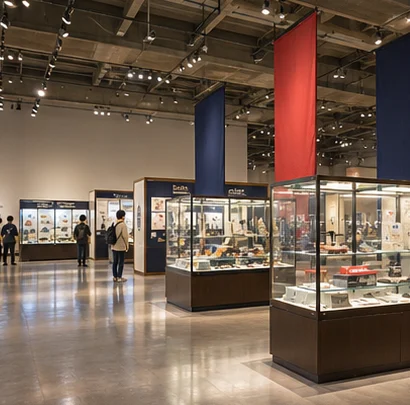
A record starts with the document. The first record for a Japanese airsoft exhibition event listing for a hypothetical new model would therefore read as an 'exhibition document' – an event listing for an airsoft exhibition displaying a model not yet released. The model on display may well not even be a near complete production model, and the event listing alone would have no information about a release date for the finished model.
Exhibitions are events which can place design history to the side of civilian leisure activities, packaging, catalogs, protective gear etc. Other hobby-related data. The display can indicate what a manufacturer wishes to publicly present with a model at a particular point in time. This does not necessarily have to be the retail date, final name or even that it was produced in its final form.
Just keep the original wording, the event's title, and the announcement's publication- or update-date(s) together. Add translations (in brackets where appropriate), and note changes in wording to the status, and add later correcting versions. The event listing is a separate item from the company's later announcement, and thus needs to be referenced separately as well.
Follow the announcement through its stages
As a hypothetical case study unfolds, the manufacturer's company statement is published after the exhibition was held. So now we have two documents to study regarding the same model: the exhibition listing and the company statement. Again, the exhibition listing introduced or displayed the subject of interest in this case, while the company statement addresses questions regarding whether the item is upcoming, scheduled, released or even discontinued.
When reading through all the steps of a development, try to refrain from compressing them all into one sentence (e.g. "announced at the show and released at a later date"). Each step in a development can be very different, and the announcment date, release date, name, and status can change at any point. Rather, make a note to say that the model was displayed in an exhibition listing, later mentioned in a company statement, and the release status is unknown for now.
Treat each announcement in the same way that you would treat the different stages of development of a new model. A preview is a preview even after the model has entered the dated notice phase. A dated notice may be revised, and a release notice can be withdrawn at a later date in favor of a discontinuation notice.
Read dates as evidence, not promises
Dates may be one of the hardest things to accurately read. For example, an event's date will typically list the dates of an exhibition or public program. A page's publication date will tell you when a given piece of information was put online. And an announced release date is simply the scheduled release date for a product as it was announced. All three are different forms of evidence, and so should be treated accordingly.
Thus in our example of an airsoft model first an exhibition program appears, then the manufacturer's statement, and only later an update to the announcement with changed wording as to timing. In the responsible account for these finds all the above dates will be listed in chronological order followed by a description of the change. A currently valid date will not be listed under the initial announcement under which it was posted, and dates like 'Summer' or 'October' will not be changed into fixed dates.
When listing a timestamp for a source (such as an exhibition, announcement, web page, etc.), keep the timestamp as it was in the original source, and note the time zone if the original source noted it. Also, be careful when a translated page reformats a month or season into a date (i.e. "Winter" into "Dec" etc.). Compare the reformat with the original for any editorial changes, and note if the original was undated. In your notes, write "undated" for sources without publication dates, or record the date you accessed the online source with full publication information in a private note.
These same methods are useful for recognizing the status of objects to be included in a museum or catalog. A collector would like to know whether a photo of an item was taken at the time the item was exhibited, was included in a catalog, or was announced in an advertisement. Knowing the date on which an item was published is only useful if one knows how that item relates to the object being studied. Therefore, one needs to label such items as having been 'exhibited', 'announced', 'released' etc.
Separate confirmed status from hopeful language
Language used by manufacturers to update their customers on products under development, scheduled for release, etc. needs to be carefully noted as such, and secondary reporting needs to be watched for excited language (e.g. "preview", "concept", "available") that may mislead readers. Use a compact status line to note source, status and date.
Work with these dates as you build your own list of airsoft related releases in workable notes or archive in a short form status line that records the source document title and then status wording followed by the published date i.e. "Company statement – planned release – dated on source."
Write the correction before it is needed
The clarification by the manufacturer of a correction of earlier statements can also be noted. A correction has to be short, visible and clear. The error has to be explained in detail and then the correct text has to be given. This can differ from the initial headline.
A good correction is short, visible, and specific. The correction for the earlier error would read: "Correction: An earlier version of this text had mistaken the exhibition listing for a release notice. In fact the listing had appeared as a preview and the company statement later provided a clarification but no release date yet."
Whether an error in understanding the translated terms of announcements for airsoft has occurred needs to be as clear as possible for other readers to understand why you have been working with a wrong translation. (The wrong translation has to be quoted as well as the correct term used for the status in the source.)
Following all Japanese airsoft announcements well can be summed up with one simple rule: understand what you have been given to read. That is to say, that an airsoft exhibition program, a manufacturer's statement, a release notice, a museum record, a translated term or even a correction all have their individual place within the history of Japanese design and Japanese civilian hobby culture. So long as we remain aware of the individual boundaries of each of these we should be able to make sense of them all.
Related articles
Understanding Japanese Airsoft Culture and Community
Explore the different ways Japanese makers, collectors and recreation groups bring the hobby together.
Read More